See
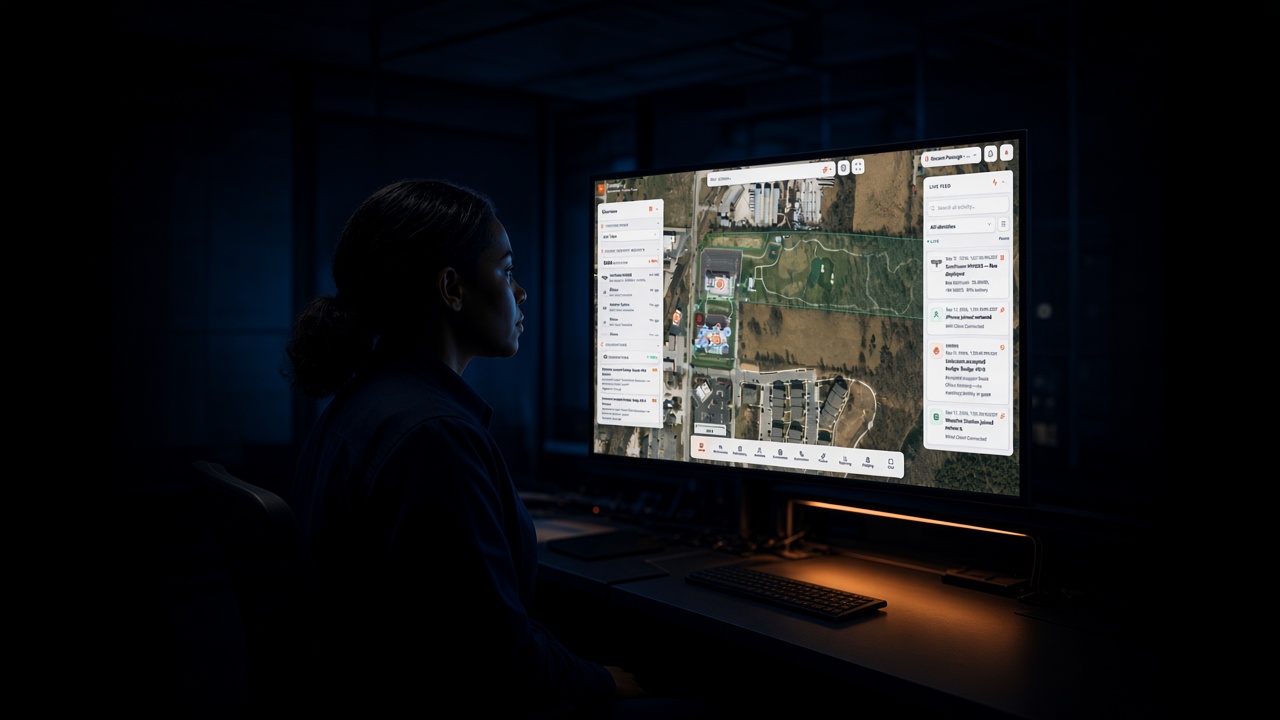
Unify cameras, sensors, access, and machine telemetry into one live picture.
 Secure Passage
Elemental to Your Security®
Secure Passage
Elemental to Your Security®

Introducing Truman
Truman connects humans, digital identities, places, systems, and autonomous machines into one intelligent fabric—so security teams can see, decide, and act in real time.
Unify cameras, sensors, access, and machine telemetry into one live picture.
Correlate identity across humans, non-humans, and locations — continuously.
Apply AI and policy in real time so the right response fires first.
Coordinate robots, drones, and human teams from a single command layer.
Vendor-neutral by design — cloud, hybrid, or on-premises. Truman works with your environment as it exists today.
Mission walkthrough
Truman isolates anomalies across thousands of feeds so human judgment stays sharp — allowing you to focus on what matters.
Truman
Most physical-security platforms organize around devices, alarms, or locations. Truman starts with identity — humans, devices, vehicles, credentials, systems, robots, drones, and other non-human entities in the environment.
It continuously connects their activity to places, events, and policy, so operators get a living operational context instead of disconnected feeds.
That identity-first layer surfaces conditions like:
Truman is a vendor-neutral control plane that works with the security and operational investments you already have — access control, cameras and VMS, identity providers, HR, visitor management, LPR, building systems, environmental sensors, operational technology, and autonomous machines.
No rip-and-replace. Truman adds an intelligent layer across existing infrastructure so signals finally share context.
“Most organizations have the information they need, but it is trapped in separate systems that do not understand one another. Truman brings those signals together, connects them to identity and converts them into a continuous operational narrative. It allows organizations to move from watching individual systems to operating the entire environment.”
Truman is the operating layer for deploying Physical AI safely — so people and autonomous machines share context, follow common policies, and coordinate in the same environment.
Multi-tenant cloud, hybrid, and on-premises deployments for complex, distributed, or highly regulated environments — data centers, corporate campuses, government facilities, public safety, schools, healthcare, critical infrastructure, and large commercial properties.
Truman can also run as a managed service through the Secure Passage Managed Operations Center: continuous operational intelligence, event monitoring, escalation, and coordination across security systems and autonomous fleets.
Truman moves teams from passive monitoring to active operational control — identity, physical security, operational intelligence, and autonomous systems in one identity-first Physical AI operating system.
“AI should not simply create more alerts for people to watch. It should understand the environment, connect the relevant signals and help coordinate the right response. Let Truman do the staring. Let your people focus on the decisions that require human judgment.”
Thousands
of Daily Signals
Sub-Second
Processing
Identity Across
Humans, Non-Humans & Locations
Managed Services
Pair Truman with Secure Passage operators who monitor, triage, and escalate — so your team gets outcomes, not another wall of alerts.
Round-the-clock vigilance across cameras, access, and autonomous assets — correlated through Truman before it hits your queue.
Policy-driven playbooks that coordinate humans, drones, and on-site teams the moment identity and context align.
Assessments, integration, and tuning from our services team — built around your sites, sectors, and operating model.

About Secure Passage
We fuse technology, intelligence, and integrity to protect what matters most. Founded and led by Gary Fish, Secure Passage carries forward a legacy of security innovation—bringing clarity and control to the physical world.
Resources
Understand every signal. Enforce every response. Build a Physical AI strategy that scales from a single site to a global estate.
Build Your Physical AI Strategy →
About
Redefining what security stands for.
Security isn’t just about stopping threats—it’s about leading with purpose. At Secure Passage, we fuse technology, intelligence, and integrity to protect what matters most.
Founded and led by Gary Fish, Chairman and CEO, Secure Passage carries forward the legacy of one of cybersecurity’s true trailblazers. For more than two decades, Gary has reshaped the security landscape—building, scaling, and redefining what integration means across an entire industry. From launching FishNet Security, the world’s first major cybersecurity integrator, to creating FireMon, which revolutionized policy management, and founding Fishtech Group, the innovation engine that evolved into Cyderes, Gary’s vision has never followed trends—it’s set them.
True security isn’t defined by firewalls or fences—it’s defined by leadership. At Secure Passage, every decision begins with integrity, accountability, and service to others. Our mission is clear: deliver clarity and control across every layer of protection—without disruption, without compromise.
Because security isn’t just about defense—it’s about preserving what makes life worth living. In the end, real protection safeguards both life and the ability to live it.
Seeing risk clearly through one connected operational lens.
Decades of experience and AI precision fused into actionable foresight.
Grounded in integrity and accountability—protecting life and the ability to live it.
We’re a Security Software Engineering firm with a human mission — transforming how organizations protect people, property, and purpose. We design and deliver intelligent solutions that connect systems, sensors, and data into one living layer of insight. In short: we make security simpler and smarter — so you have more time to lead, serve, and live.
It’s both literal and symbolic — a nod to the safe movement of people and information. Whether it’s a school hallway, a hospital corridor, or a city street, we help create secure passageways for life to move forward.
We don’t just sell tools; we help teams see the full picture. Our platform unifies data and decisions without rip-and-replace disruption — bringing together what you already have and making it work smarter together.
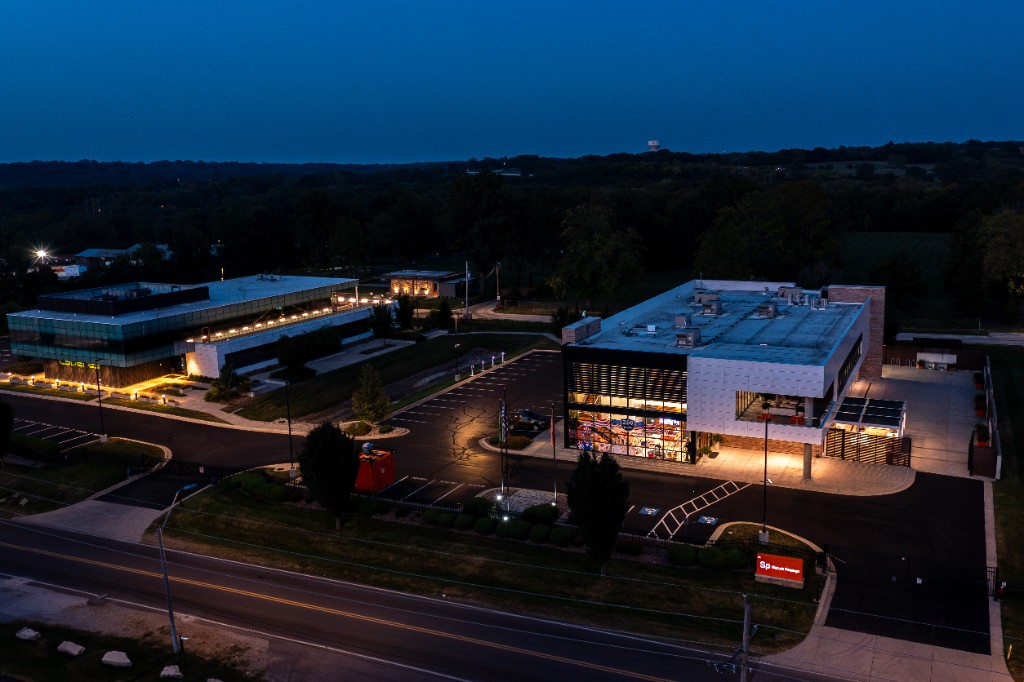
Kansas City, Missouri — where innovation meets barbecue. Our Living Lab Campus is more than an office; it’s a real-world testbed for technology and collaboration.
Our Chairman & CEO, Gary Fish, is a pioneer in security innovation — the visionary behind companies like FishNet Security, FireMon, and Fishtech Group. His legacy of leadership continues here, with a team driven by the same values: integrity, accountability, and service.
It’s our promise — that every Secure Passage solution is a fundamental building block of protection. Like elements in a periodic table, each one stands on its own but becomes even more powerful together.
Artificial intelligence fuels our insight, not our identity. We use advanced AI to correlate signals, predict trends, and reduce noise — giving teams the clarity to act with confidence. The human always stays in the loop; the AI just helps make the loop smarter.
From schools to city grids, control rooms to command posts—security challenges vary, but the need for clarity, coordination, and confidence is constant. Whether you're exploring one platform or considering a comprehensive solution, we're here to help you make sense of what you have, uncover what you need, and craft a system that fits. Let's talk through your world, your goals, and how we can help you secure what matters—your way.

Resources
Official announcements from Secure Passage and Truman.
Full press kits and PDF downloads will land here as they publish.
Press release
New managed service unifies physical security, critical operational technology, autonomous fleets, and specialized drone intelligence through continuous human-led operations.
Kansas City, Mo. — Secure Passage today announced the availability of 24×7 Managed Operational Intelligence Services powered by Truman, the company’s Identity-Driven Operational Control Plane for the physical world.
Delivered from Secure Passage’s purpose-built, 20,000-square-foot Mission Operations Center in Kansas City, the new service provides organizations with continuous monitoring, investigation, and coordinated response across physical security, critical operational technology, autonomous systems, and distributed facilities.
Secure Passage’s experienced operators use Truman to correlate information from existing cameras, access control systems, visitor management platforms, alarms, sensors, building-management systems, operational technology, robots, drones, and other connected technologies.
Rather than simply watching alarms or adding another dashboard, Secure Passage continuously evaluates what is happening, who or what is involved, whether the activity is expected, what operational impact it may have, and what action should be taken.
Most organizations already have more technology and data than their teams can effectively monitor. What they lack is the ability to bring that information together, understand it in context, and act on it quickly. Our 24×7 Managed Operational Intelligence Services combine Truman’s intelligence with experienced human operators so our customers always have someone—and something—watching, understanding, and responding.
Traditional monitoring services typically react to individual alarms generated by disconnected systems. Truman creates a unified operational context by correlating identities, locations, devices, behaviors, system conditions, events, and historical activity in real time.
Secure Passage’s Mission Operations Center uses that context to:
The service can support a single facility or a distributed enterprise, including data centers, critical infrastructure, commercial real estate, manufacturing, public venues, residential communities, and government environments.
Secure Passage extends managed operational intelligence beyond traditional physical security by monitoring critical operational technology and infrastructure signals.
Truman can ingest and correlate alerts from building-management systems, HVAC and cooling systems, generators, uninterruptible power supplies, electrical systems, environmental sensors, fire and life-safety systems, networking infrastructure, and other mission-critical equipment.
When a critical condition is detected, Truman provides operators with the surrounding context needed to understand the potential operational impact. Secure Passage personnel can then validate the event, initiate the appropriate workflow, notify designated personnel, escalate the incident, and document the response.
This gives organizations continuous awareness across both their security and operational environments without requiring separate monitoring teams for every system.
Secure Passage’s managed service also provides centralized supervision and coordination of autonomous ground robots and aerial drones.
Through Truman, Mission Operations Center personnel can manage patrol schedules, monitor fleet availability and system health, review live video and telemetry, investigate alarms, authorize dispatches, and coordinate autonomous assets with onsite security personnel and emergency responders.
Robots and drones can be deployed under predefined policies and customer-approved playbooks for routine patrols, alarm verification, restricted-area investigation, perimeter inspection, and elevated-threat response. Truman maintains a record of autonomous activity, operator decisions, telemetry, and resulting actions.
Autonomous systems should not operate as disconnected devices. They need to be part of the same operational control plane as cameras, access control, identity, sensors, and human response. Truman allows us to manage the entire fleet as a coordinated extension of the customer’s security and operations team.
For customers with elevated security, aviation, or critical-infrastructure requirements, Secure Passage can provide separately scoped drone standby, remote or onsite pilot support, and counter-drone intelligence services.
These specialized services may include authorized drone deployment, aerial alarm verification, scheduled or event-based overwatch, airspace awareness, detection and correlation of potential unauthorized drone activity, and coordinated notification and response.
Counter-drone intelligence is incorporated into the broader Truman operational picture, allowing aerial activity to be correlated with people, vehicles, access events, physical locations, and other security or operational signals.
All drone and counter-drone services are provided subject to applicable laws, aviation requirements, customer policies, site conditions, and specifically agreed operating procedures.
Secure Passage’s approach combines the speed and scale of artificial intelligence with human judgment and accountability. Truman continuously processes operational signals, identifies activity requiring attention, and recommends appropriate actions. Trained Secure Passage personnel validate events, investigate context, authorize actions, and coordinate the response.
This model allows organizations to gain around-the-clock operational awareness without building and staffing their own Mission Operations Center.
AI should make people more effective, not remove accountability from critical decisions. Truman does the staring, correlation, and analysis. Our operators provide judgment, oversight, and coordination. Together, they deliver a level of operational awareness that disconnected technology and traditional alarm monitoring cannot provide.
Truman is designed as a vendor-neutral control plane that works across an organization’s existing technology investments. Customers are not required to replace their current cameras, access control systems, alarms, sensors, building systems, robots, drones, or operational technology.
Truman connects those systems through a common operational data layer, allowing Secure Passage to manage activity across multiple technologies, vendors, assets, and locations as one coordinated environment.
The platform can be deployed in a Secure Passage-managed cloud environment, a customer-controlled cloud, a hybrid architecture, or fully on-premises for organizations with strict privacy, security, operational, or regulatory requirements.
Secure Passage’s 24×7 Managed Operational Intelligence Services can complement an existing security or operations center, extend coverage after hours, or provide a complete managed capability.
The offering ranges from continuous monitoring and escalation to fully managed operations incorporating physical security, critical OT monitoring, AI-assisted investigations, autonomous fleet management, automated workflows, drone operations, and coordinated incident response.
Organizations do not need another screen for someone to watch. They need an operational partner that can continuously understand their environment and help them act. That is exactly what Secure Passage and Truman provide.
Secure Passage is a Kansas City-based technology company focused on bringing operational intelligence to the physical world. Its Truman platform is an Identity-Driven Operational Control Plane that connects physical security, identity, building, infrastructure, operational technology, sensor, robotic, and autonomous systems into a unified intelligence and action layer.
Truman helps organizations understand what is happening across their environments, correlate activity around identity and context, investigate events using artificial intelligence, and coordinate human and autonomous response—all without requiring customers to replace their existing technology.
Kelly Cerny, Secure Passage, Kansas City, Missouri

Resources
How Truman logs, remembers, and answers.
New briefs will appear in this library as they are published.
Technical brief
Austin Fish, Vice President at Secure Passage, Inc.
As the Truman Operational Control Plane scales to ingest high-velocity physical security telemetry from disparate edge ecosystems, legacy data architectures create unsustainable latency, index bloat, and AI context starvation.
This educational brief outlines a foundational paradigm shift to Semantic Entity Chunking. By decentralizing rigid data schemas into universally tagged atomic units (chunks), the Truman platform eliminates database sprawl, drastically reduces AI token overhead, and unlocks a certified virtual security practitioner experience with zero hallucination.
The Truman platform ingests telemetry from diverse devices, including access control systems, facial recognition nodes, and environmental sensors. Processing this data through traditional relational tables creates three critical failure points at enterprise scale:
To enable real-time situational awareness and autonomous device control, the Truman Operational Control Plane transitions from an inflexible schema-on-write model to an agile schema-on-read architecture using a three-tier lifecycle.
Incoming telemetry is no longer forced into wide database tables. A cryptographic hash of the raw string is calculated and saved in a master vault database to guarantee absolute forensic integrity for compliance.
A lightweight extractor isolates only high-value operational nodes (for example, badge ID and door status) and saves them as independent, atomic chunks. An in-memory topology database intercepts these chunks to inject physical spatial context (floor, zone) directly into the chunk’s tags before storage.
A sliding time window clusters the chunks by entity and zone. This dense, noise-free cluster is processed by an edge-deployed small language model to generate a concise, human-readable situational narrative for the audit log.
Restructuring the data path yields dramatic improvements across ingestion, search, and storage.
By utilizing advanced document-style indexes instead of multi-table joins, queries remain flat and exceptionally fast, even when scanning hundreds of millions of records.
| Records (millions) | Traditional joins | Indexed chunk search |
|---|---|---|
| 0 | 50 | 10 |
| 100 | 138 | 13 |
| 200 | 381 | 16 |
| 300 | 1,051 | 20 |
| 400 | 2,899 | 24 |
| 500 | 8,000 | 28 |
Feeding a language model a dense semantic chunk costs a fraction of the tokens compared to raw payloads, resulting in a near-complete elimination of AI orchestration costs per event.
| Form | Tokens |
|---|---|
| Raw JSON | 2,500 |
| Parsed table | 800 |
| Semantic chunks | 45 |
Same event, three forms
The device message, including hardware fields an operator never asks about.
{
  "event_time": "2026-08-27T17:01:58Z",
  "device": "door-04",
  "vendor": "Example Access",
  "firmware": "4.2.1",
  "payload": {
    "auth_type": "badge_swipe",
    "credential_id": "badge-9982",
    "relay_status": "open",
    "voltage_mv": 12050,
    "network_latency_ms": 14,
    "temperature_c": 22.4,
    "signal_dbm": -67
  }
}
The same swipe forced into a wide row. New sensor types mean new empty columns.
{
  "id": "01",
  "timestamp": "2026-08-27T17:01:58Z",
  "device": "door-04",
  "vendor": "Example Access",
  "credential_id": "badge-9982",
  "face_id": null,
  "plate": null,
  "temperature_c": null
}
Only the facts, already tagged to a place. This is what the model is given.
[
  {
    "entity": "badge",
    "value": "badge-9982",
    "tags": { "zone": "employee_entrance", "device": "door-04" }
  },
  {
    "entity": "door",
    "value": "unlocked",
    "tags": { "zone": "employee_entrance", "device": "door-04" }
  }
]
Illustration of one door event. Not a customer record. The raw sample is shortened; a full payload is what costs about 2,500 tokens.
After a brief active period, heavy raw vault logs are offloaded to cold storage archives, while the lightweight chunks remain in the hot database for a full year, keeping active storage costs heavily minimized.
| Store | Month 1 | Month 12 |
|---|---|---|
| Traditional active database | 40 GB | 540 GB |
| Chunked cold storage archive | 8 GB | 300 GB |
| Chunked active database | 30 GB | 88 GB |
A flagship capability of the Truman Operational Control Plane is enabling operators to converse with the system as if speaking to a certified physical security practitioner. The architecture supports this through a dual deterministic-generative pipeline.
When an operator asks an aggregation question (for example, “How many people have entered the executive suite?”), the Truman AI router translates the query into a high-speed database index scan. The database executes the exact math, ensuring the AI reports a certified, hallucination-free number.
If an investigator asks for a spatial trajectory, Truman instantly pulls the tagged location chunks for that specific entity across all cameras and doors, synthesizing a minute-by-minute timeline without joining separate tables.
To prevent conversational amnesia and context saturation, Truman summarizes ongoing investigations into memory chunks, capturing targets, locations, and time windows. When operators return days later, the system instantly recalls these tagged memory anchors to provide updated, persistent situational context.
Through Semantic Entity Chunking and language-model reporting, the Truman Operational Control Plane transforms from a passive repository into an intelligent orchestration engine, delivering authoritative, fully data-accurate, and hallucination-free security intelligence.
Resources
Build clarity for the physical world.
We're engineers, operators, and security practitioners building Truman — the identity-centric control plane where environments become the interface.
Our Kansas City headquarters is a Living Lab: real facilities, real technology, and a culture that values truth, clarity, and steady vigilance. Open roles span engineering, operations, and go-to-market.
Open roles will be posted here.

Resources
Field notes, product thinking, and stories from the Living Lab.
Blog
Gary Fish, Chairman and CEO of Secure Passage, Inc.
The physical world is becoming intelligent.
Buildings are filled with sensors. Cameras can recognize objects and behavior. Access-control systems track movement. Robots patrol facilities. Drones inspect infrastructure. Operational technology continuously reports the condition of critical systems.
Every environment is producing more data than ever before.
Yet most organizations still operate these systems independently.
A badge swipe lives in one platform. Video lives in another. Identity is managed somewhere else. Building systems, environmental sensors, vehicles, robots, and drones each generate their own alerts—without understanding what the others already know.
The problem is no longer a lack of information.
The problem is that the information does not share context.
For decades, physical security evolved by adding another tool to address each new requirement.
Organizations deployed cameras, access control, visitor management, license-plate recognition, intrusion detection, environmental monitoring, identity platforms, command-center software, and countless specialized systems.
Each investment solved an important problem. But together, they created a fragmented operating environment.
An operator may see a door alarm without knowing who entered. A camera may detect movement without understanding whether it is expected. A terminated employee’s credential may still be active. A vehicle, device, robot, or drone may enter a restricted area without being connected to the identity responsible for it.
The signals exist. The systems simply do not understand one another.
That forces people to perform the correlation manually—watching screens, checking separate applications, and trying to assemble a complete story while an event is already unfolding.
Visibility alone is no longer enough.
Organizations need understanding.
Most physical-security platforms organize the world around devices, alarms, or locations.
Truman starts with identity.
That includes human identities, but it does not stop there. Truman establishes identity across people, credentials, devices, vehicles, systems, robots, drones, and other autonomous machines operating in the environment.
It continuously connects those identities to activity, location, behavior, and policy.
A badge swipe is no longer just a transaction. It becomes part of an identity’s operational history.
A camera detection is no longer an isolated event. It can be connected to access activity, vehicle movement, employment status, location, time, and policy.
A robot or drone is no longer simply a device. It becomes a governed participant in the environment—with an identity, permissions, location, mission, and chain of accountability.
Identity turns activity into context.
Context turns alerts into understanding.
Understanding makes coordinated action possible.
Truman is the identity-first Physical AI Operating System.
It connects humans, non-humans, places, systems, and autonomous machines into one intelligent operational fabric.
Truman works above the existing technology environment as a vendor-neutral control plane. It does not require organizations to abandon the investments they have already made.
It connects access control, cameras, identity providers, HR systems, visitor management, license-plate recognition, building systems, environmental sensors, operational technology, robots, drones, and other sources of physical-world intelligence.
Truman then applies identity, context, AI, and policy across those systems in real time.
It allows organizations to:
This is more than unified monitoring.
It is an operating layer for the physical world.
Physical AI is moving quickly from experimentation into real-world operations.
Autonomous robots are patrolling facilities. Drones are verifying alarms and inspecting critical infrastructure. Intelligent machines are beginning to operate alongside employees, contractors, visitors, and security personnel.
This changes the security model.
When machines can observe, decide, move, and act in the physical world, organizations need more than device management. They need a way to establish identity, enforce policy, share context, coordinate missions, and preserve human oversight.
Without a common operating layer, autonomous systems risk becoming another collection of disconnected tools.
Truman provides that layer.
It gives human teams and autonomous machines a shared operational context. It defines who—or what—is present, where they are, what they are permitted to do, and how the environment should respond.
That is how Physical AI moves from isolated automation to governed operations.
Three major forces are converging.
First, the physical world is producing unprecedented amounts of operational data.
Second, artificial intelligence can now correlate that data, identify meaningful patterns, and present operators with actionable context in real time.
Third, autonomous machines are moving from controlled pilots into active operational environments.
Organizations cannot manage this new reality by adding more screens, more alerts, and more disconnected systems.
They need an intelligent layer that connects what they already have and prepares them for what is coming next.
The organizations that establish this operating layer now will be positioned to deploy Physical AI safely, scale autonomous operations, reduce dependence on manual monitoring, and respond faster with greater confidence.
Those that do not will face more complexity, more noise, and more operational risk.
AI should not simply generate more alerts for people to watch.
It should understand the environment, connect the relevant signals, isolate what matters, and help coordinate the right response.
Truman continuously processes activity across the physical world so operators do not have to watch every feed or investigate every isolated event.
It keeps experts in the loop while allowing them to focus on the decisions that require human judgment.
Let Truman do the staring.
Let your people lead, decide, and act.
The physical and digital worlds are no longer separate.
Humans and autonomous machines are beginning to share the same environments. Identity is becoming the foundation for trust. Security operations are expanding into operational intelligence. And AI is moving beyond software into the physical world.
The future does not need another disconnected tool.
It needs an operating system.
Truman is the identity-first Physical AI Operating System.
One platform. Every mission.
Zero Trust for the physical world.
About
Operators, engineers, and leaders building Physical AI together.
Secure Passage is led by Gary Fish and a team of security operators, product builders, and field experts who have spent careers securing people, places, and critical infrastructure.
Updates coming soon
Legal
At Secure Passage, your privacy matters. This Website Privacy Policy explains what personal information we collect on this website, how we use and protect it, and the choices you have. It covers this website only — not our software products or customer platform. For product and services data practices, see our Data Policy.
By using this website, you consent to the collection and use of information as described here.
Information you provide
Information collected automatically
Information from third parties
This website is intended for business professionals. We do not knowingly collect personal information from anyone under 18. If you believe we have, contact us and we will delete it.
We may share personal information with your consent, with corporate affiliates, and with vendors who help us run the website (hosting, analytics, email, and similar services) under appropriate safeguards. We may also disclose information to protect Secure Passage, our people, or visitors; to detect fraud; to comply with law; or in connection with a merger, acquisition, or asset sale.
This site may link to third-party sites. Their privacy practices are their own — we encourage you to review their policies. We may share de-identified or aggregate information that does not identify you.
To exercise these rights for information collected on this website, contact us using the details below. If you are an employee of a Secure Passage customer and your data lives in our products on that customer’s behalf, please contact that customer directly.
We use cookies and similar tools for essential site function, analytics, and (where enabled) marketing measurement. You can block or delete cookies in your browser; some features may not work as intended. Learn more about cookies at allaboutcookies.org.
We use reasonable administrative, technical, and physical safeguards to protect personal information in our custody. No method of transmission or storage is perfectly secure; please protect your own devices and accounts.
We keep personal information only as long as needed for the purposes in this policy, our internal retention rules, legal obligations, dispute resolution, and enforcement of agreements.
Residents of certain U.S. states (including California and Virginia) may have additional rights, such as knowing what we collect, requesting deletion, and opting out of “sale” or “sharing” for cross-context advertising. We do not sell personal information for money. Some third-party advertising cookies may be treated as a “sale” or “share” under state law — you can limit those via cookie controls described above.
For website data, Secure Passage acts as a “business” / “controller.” For data we process inside our products for customers, see the Data Policy.
Secure Passage does not materially operate or serve customers in the UK or EEA and is not currently subject to GDPR as a primary regime. If you are a UK or EEA resident and believe we hold your personal data, contact us. You may also have the right to lodge a complaint with your local supervisory authority.
We may update this policy from time to time. Material changes will be posted on this page with a revised “Last updated” date. Continued use of the website after changes means you accept the updated policy.
Questions or privacy requests for this website:
Legal
This Data Policy describes how Secure Passage collects, uses, stores, and protects personal information in our products and services — including our platform, related applications (such as public safety, school safety, event safety, and enterprise threat analysis), APIs, and documentation (collectively, the “Services”). It does not cover this marketing website; for website practices, see our Website Privacy Policy.
When business customers (“Customers”) use the Services, they may enable Secure Passage to process personal information on their behalf. Examples include:
The list above is illustrative, not exhaustive. Exact categories depend on how each Customer configures and uses the Services.
Subject to Customer agreements, we may use personal information to:
Customers may connect third-party systems (for example CRM, email, or support tools) that transfer personal information into or out of the Services. Subject to agreements, we may disclose Customer information to protect Secure Passage and users, detect fraud, comply with law, or complete a corporate transaction. We may share aggregate or anonymous information that does not identify individuals.
If you are an employee or individual whose information was uploaded by a Customer, contact that Customer to exercise access, correction, or deletion rights. We process that data on the Customer’s instructions and cannot fulfill individual requests without their written direction. Customers seeking help with their own account data may contact us using the details below or via the Website Privacy Policy contact channels.
We maintain reasonable physical, electronic, and procedural safeguards for information under our control. Access to account data, service metadata, and logs is limited to personnel and providers who need it to deliver the Services. Data is stored in the United States. Service access uses HTTPS (TLS); passwords are encrypted in transit and at rest, or Customers may use SSO (for example SAML 2.0). No system is perfectly secure — choose strong credentials, avoid shared devices when possible, and log out when finished.
We retain Customer personal information according to our written agreements with each Customer and applicable law.
Under the CCPA/CPRA, Secure Passage generally operates as a “service provider” for Customer personal information processed in the Services and does not sell or share that information for monetary benefit. Under the Virginia CDPA, we generally operate as a “processor” on behalf of our Customers. Individual requests about Customer-hosted data should go to the Customer that controls the account.
Secure Passage does not materially operate or serve customers in the UK or EEA and is not currently subject to GDPR as a primary regime. If you are a UK or EEA resident and believe your personal data has been processed in our Services, contact us. You may also complain to your local data protection authority.
We may update this Data Policy as the Services evolve. Material changes will be posted here with a revised “Last updated” date.
Customers with questions about data practices in the Services: